
Coming Soon
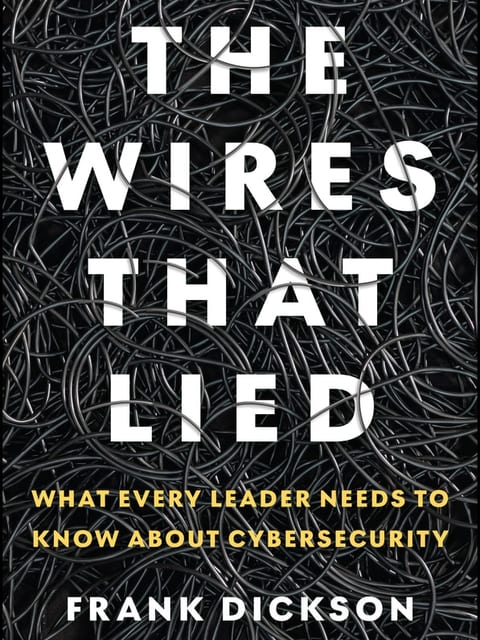
The Wires That Lied: What Every Leader Needs to Know About Cybersecurity
Every cyberattack, from the Mirai botnet to ransomware that has shut down pipelines and hospitals, runs on the same logic: the target was never the wires, it was trust. Written for the leader who makes the call, the book pairs those stories with the frameworks built to defend against them, and asks what signals your organization is sending, and whether anyone has checked if they're true.
Get the book
Available from
Publication details and retailer links will be confirmed closer to release. Register your interest below to be notified.
About the book
In 1834, a bribed telegraph operator inserted a single false signal into a message crossing France, and two bond traders in Bordeaux used it to beat every trader in Paris to the news. No one had a word for what they had done. The law hadn't imagined the crime yet. But the operator hadn't broken the telegraph. He had broken the assumption that made the telegraph worth anything: that the signal arriving at the other end could be trusted.
The Wires That Lied argues that this is still the only story cybersecurity ever tells. The wooden semaphore arms have become fiber and cloud, the bribed operator has become the stolen credential and the poisoned software update, but the logic underneath is the one the Blanc brothers understood in 1834: a network is worth exactly as much as the trust placed in it, and every attacker's real target is that trust, not the wires themselves.
The book tells that story through the incidents that defined this era of conflict: the Mirai botnet built by teenagers, the NotPetya weapon that escaped its own creators, Stuxnet's quiet sabotage of an air-gapped facility, the theft of a Secret Service laptop, the OPM breach, the SolarWinds compromise, and the ransomware campaigns that shut down a pipeline, a hospital network, and thousands of small businesses in a single stroke. Each one is told as what it actually was: a human decision exploited by another human being, not a technical failure in the abstract.
The second half turns from the threat to the response, walking leaders through the five control points every organization defends and an eight-domain framework for judging where their own defenses actually stand, not where a vendor's slide deck says they stand.
Written for the executive who has to make the call, not just the engineer who has to implement it, The Wires That Lied argues that the most important question in cybersecurity was never technical. It has always been this one: what signals is your organization sending, who is reading them, and has anyone checked whether they're true.
Stay informed
Be the first to know
Register your interest to receive publication updates, early access to excerpts, and information about launch events.
About the author
Dickson Research is a specialist market intelligence consultancy working with senior leadership teams, strategy functions, and government advisory bodies. The Wires That Lied draws on more than two decades of research into how organisations gather, interpret, and act on intelligence — and why they so often get it wrong.